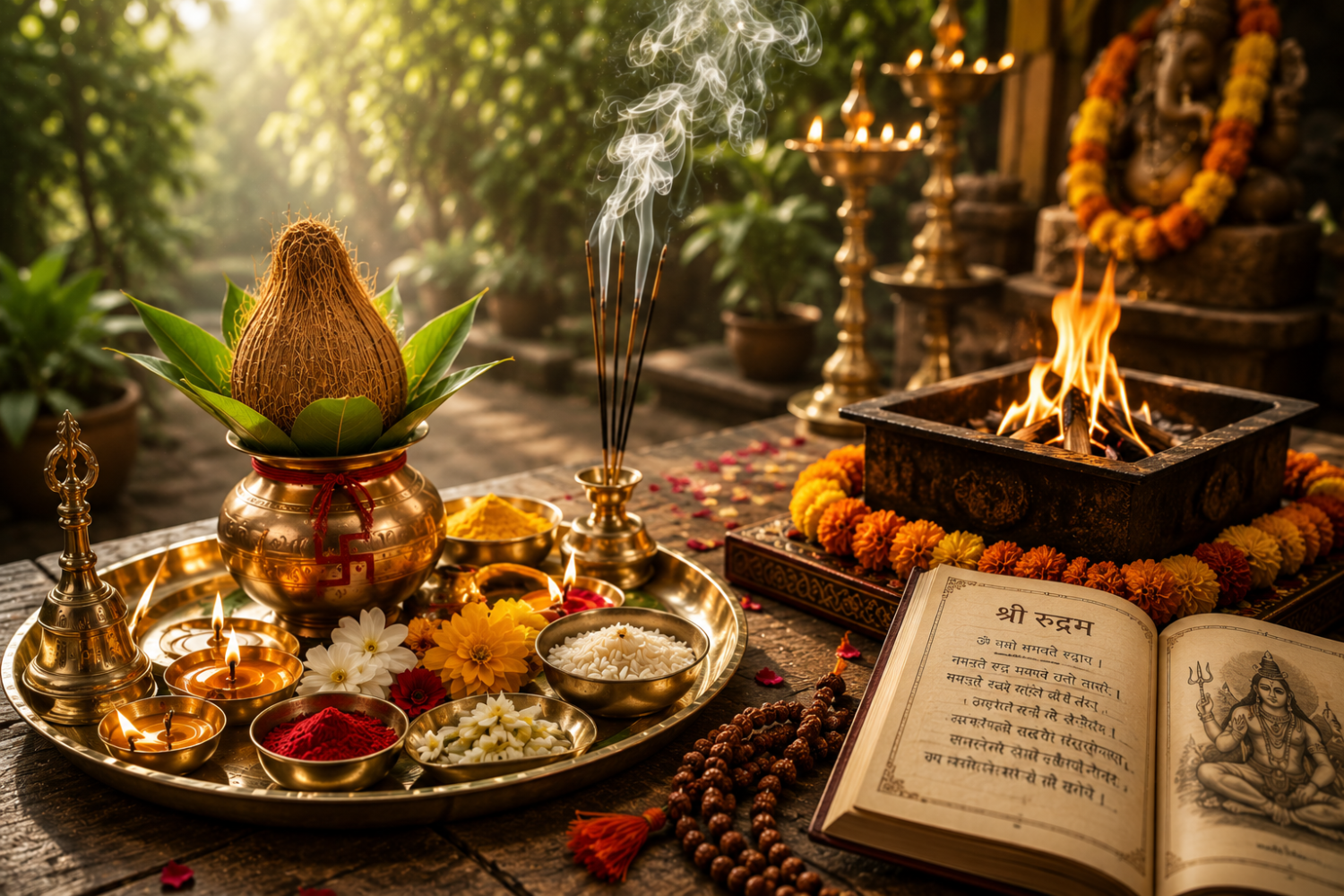
Complete Spiritual Guide for Sacred Worship at Home
Pooja is a sacred act of devotion that helps devotees establish a spiritual connection with divine energy. Performing pooja at home creates positivity, removes negativity, and invites peace, prosperity, and blessings.

Pooja is a sacred act of devotion that helps devotees establish a spiritual connection with divine energy. Performing pooja at home creates positivity, removes negativity, and invites peace, prosperity, and blessings.
A well-performed pooja is not merely a ritual—it is an expression of faith, gratitude, and surrender.
This guide explains the importance, preparation, essential items, and step-by-step process for performing pooja at home.
Importance of Performing Pooja
Daily pooja helps:
- Purify the home environment
- Improve focus and peace of mind
- Strengthen spiritual discipline
- Invite prosperity and positivity
- Create emotional balance
Spiritual vibrations generated through prayers and rituals positively influence both the mind and surroundings.
Preparing the Pooja Space
A clean and peaceful pooja area is essential.
Ideal Setup
- Choose a quiet and clean location
- Face east or north while praying
- Use a wooden or marble pooja mandir
- Decorate with flowers and lamps
- Maintain cleanliness and sacredness
Essential Pooja Items
- Brass or silver diya
- Camphor and incense sticks
- Kumkum and turmeric
- Fresh flowers and garlands
- Bell and conch
- Holy water
- Fruits and prasadam
- Idols or framed deity images
Step-by-Step Daily Pooja Procedure
Step 1 – Clean the Space
Wash the pooja area and arrange all items neatly.
Step 2 – Light the Lamp
Light a diya using ghee or oil.
Meaning: Inviting divine light and removing negativity.
Step 3 – Offer Incense and Flowers
Offer incense sticks and flowers while chanting prayers.
Step 4 – Chant Mantras
Recite devotional mantras or slokas.
Examples:
- Ganesh mantra
- Vishnu Sahasranamam
- Lalitha Sahasranamam
- Shiva Panchakshari mantra
Step 5 – Perform Aarti
Wave the diya before the deity while singing devotional songs.
Step 6 – Offer Prasadam
Offer fruits or sweets to the deity with gratitude.
Step 7 – Silent Prayer and Meditation
Spend a few moments in silence and spiritual reflection.
Types of Poojas Performed at Home
Ganapathy Pooja
Performed before starting new ventures.
Benefits:
- Removes obstacles
- Brings success and wisdom
Lakshmi Pooja
Performed for wealth, prosperity, and harmony.
Satyanarayana Pooja
Conducted for family blessings and peace.
Navagraha Pooja
Performed to reduce planetary doshas.
Ayush Homam
Conducted for health, longevity, and protection.
Tips for a Spiritually Powerful Pooja
- Maintain cleanliness and sincerity
- Avoid distractions during prayer
- Use natural pooja materials
- Chant with devotion and concentration
- Perform pooja regularly
- Offer gratitude after completion
Consistency and devotion are more important than elaborate arrangements.
Benefits of Daily Pooja
Regular pooja helps create:
- Positive energy at home
- Emotional peace and stability
- Stronger family unity
- Spiritual awareness
- Protection from negativity
Many devotees experience inner calmness and improved mental clarity through consistent spiritual practice.
Conclusion
Pooja is a sacred spiritual discipline that transforms homes into centers of peace and devotion. Through prayers, rituals, and mindful worship, devotees strengthen their connection with divine energy and cultivate positivity in daily life.
Whether simple or elaborate, every pooja performed with faith becomes a powerful expression of devotion and gratitude.